Language learners don't quit.
The moment to practice passes
before they start.
Every language app faces the same cliff.
Most never come back after week one.
of users stop practicing within 30 days of downloading a language learning app.
Source: industry retention benchmarks
Three things kept showing up.
84 surveys. 15 interviews. Every conversation pointed to the same patterns.
Missing one day felt like starting over.
One missed day reset the streak. With it went the identity of being someone who practices. People didn't pause. They stopped.
Opening the app felt like starting a lesson.
The startup cost was too high for a stolen moment. The phone was out, but the app never opened.
After a busy day I just didn't want to open an app and start learning. It felt like homework.
They said they had no time.
So we went to meet them in the time they already had.
Starting had to be as cheap as opening Instagram.
I defined a hypothesis: if practice fits stolen moments, sessions must feel nothing like lessons.
Three constraints I committed to early.
Sessions felt too long for a small gap.
Opening felt like starting from scratch.
Missing one day felt like total failure.
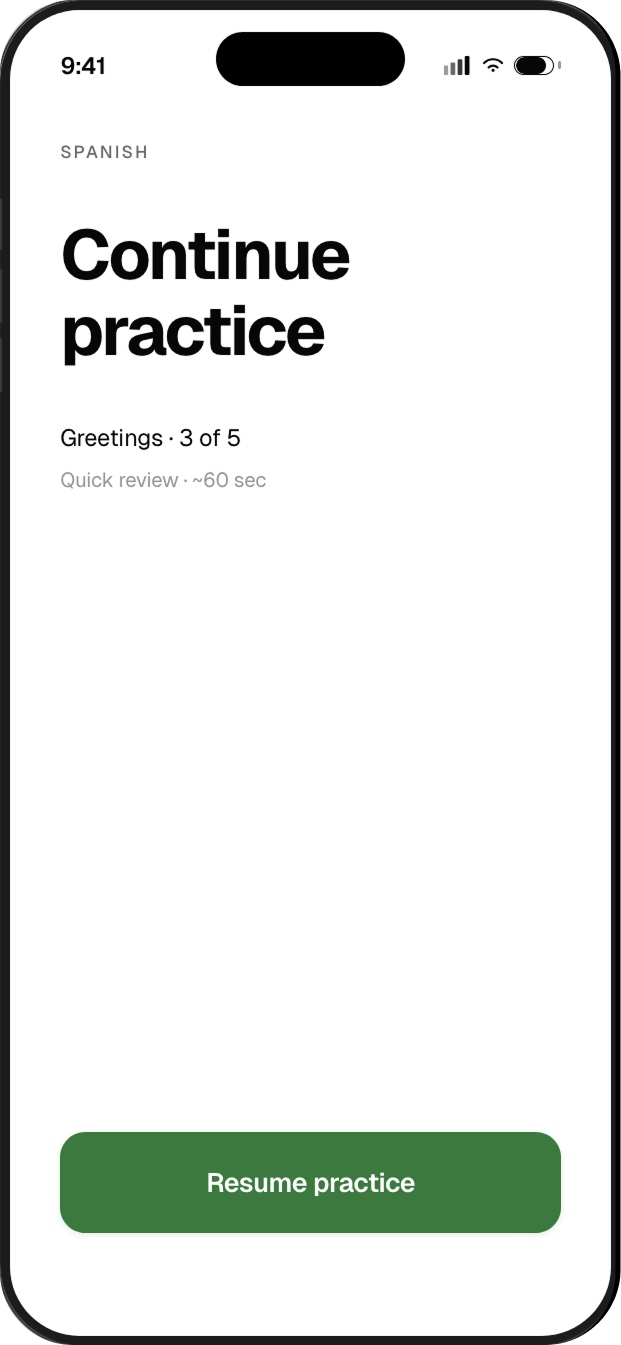
We ran it. Then we watched. 8 people, 7 days, one metric: how many idle moments became sessions.
of idle moments never became sessions.
The product wasn't failing. The context was.
Some moments were inaccessible. Phone in a bag, in a pocket, no hands free.
When the phone was out, something else was already running.
Even with the phone free, opening the app felt like work.
Practice competed with Instagram, Slack and Messages. It lost.
I mapped three constraints. One surface met all of them.
Every failed moment shared one thing: the phone was the bottleneck, not the design.
Practice had to leave the phone.
And move to the wrist entirely.
The phone never needs to leave the pocket.
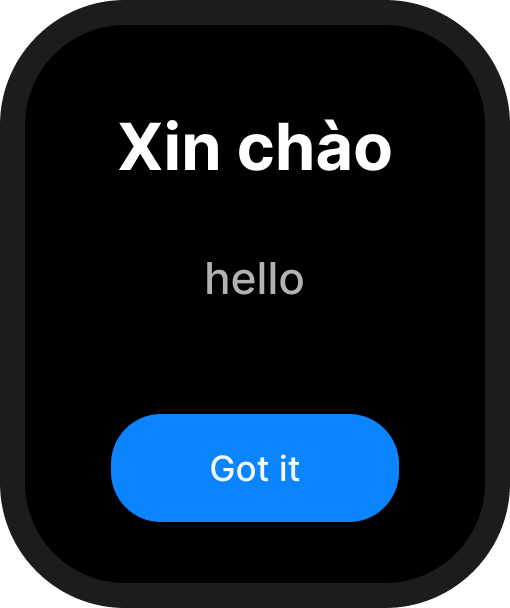
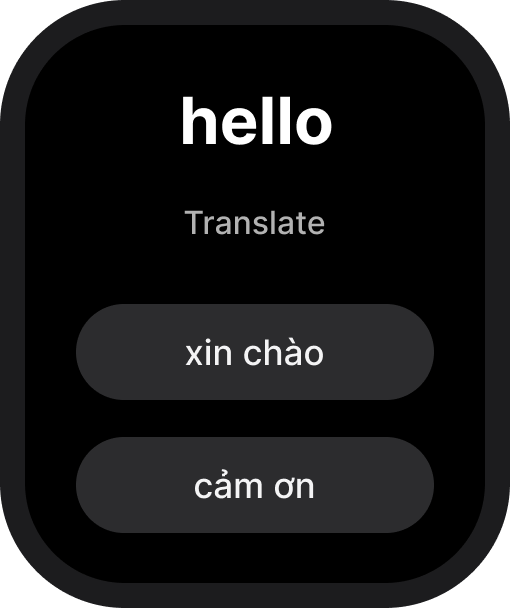
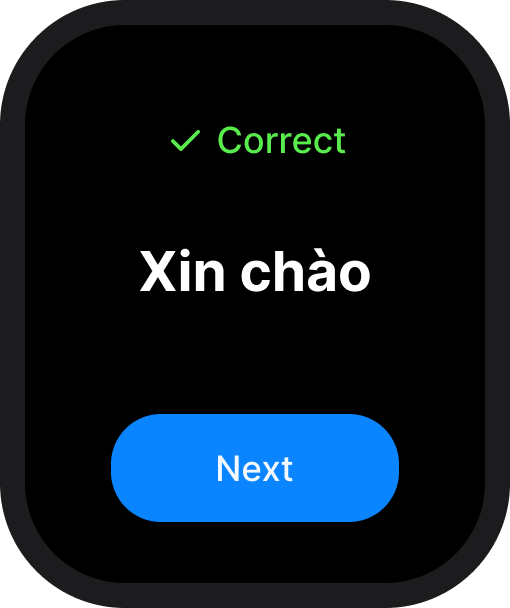
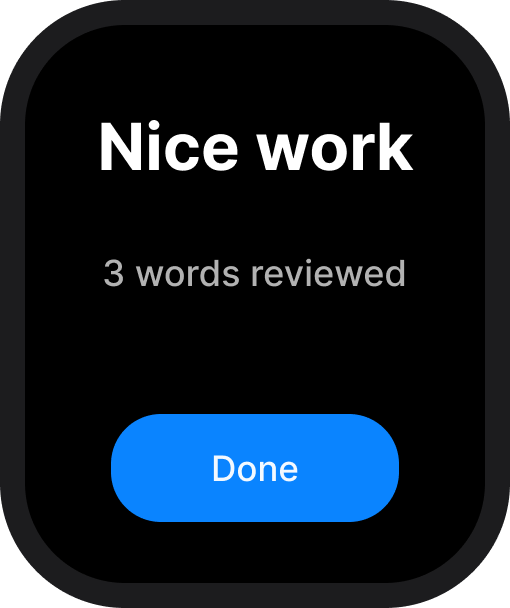
One interaction. Designed around the moment, not the session.
No decision required. Just a raised wrist.
Would the wrist actually convert more moments?
more idle moments converted to practice sessions
prototype test · n=5 · 7 days
of idle moments became sessions
of idle moments became sessions
Early signal only. Small sample, prototype based. Directionally strong, not conclusive. The real test is a native app over 30 days.
Three decisions worth explaining.
Here's why each one made sense.
Why did we use a Wizard of Oz prototype instead of building the actual app?
Prove the surface works before spending weeks on it.
Participants used static phone images of the watch screens in real idle moments and self-reported. We wanted to know if the surface changes behavior before spending weeks on native development. The 2.5× lift said yes.
Why did we cut the streak feature?
Show up when you can. Not to keep a number alive.
Streaks punish gaps. The watch is built around consistency, not perfection.
Why does the watch only do one thing?
One job. No decisions required.
Adding lesson navigation or settings means making a choice before the first word appears. That kills the moment. Those features live on the phone. The watch just converts the gap before it closes.
This project changed how I think about retention. The problem was never inside the app.
Moving to the wrist didn't improve the experience.
It made the experience possible.